Kai Raisbeck, Student of the University of Tasmania writing as an
exchange student at the University of Ottawa, Canada, 2007
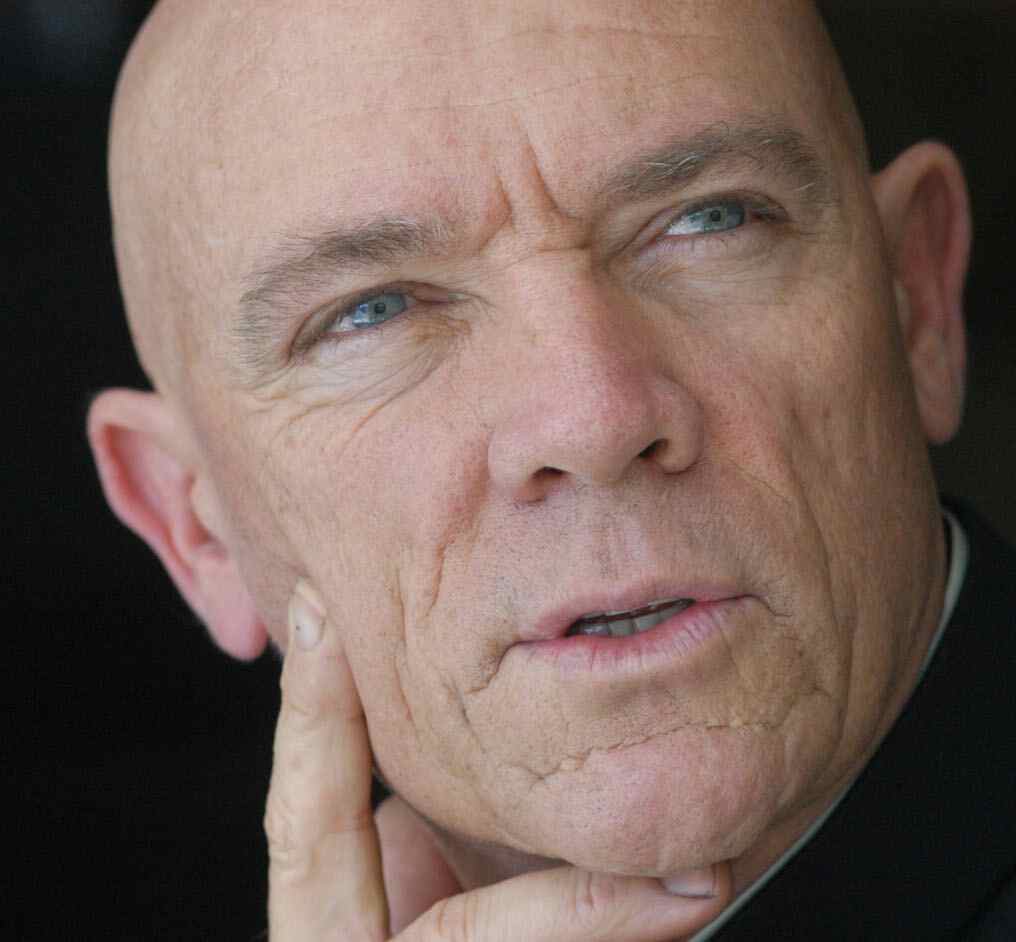
INTERVIEW WITH JOHN NOBBS co-director Frank Theatre
for a Research Paper on Frank Theatre
Questions
1. What are the fundamental differences between the Suzuki Actor Training Method (SATM) and the Frank Suzuki Performance Aesthetic (FSPA)?
A:
The FSPA is a translation and decoding of the SATM. Jacqui and I contend that the SATM is universal and applicable to any theatre situation anywhere, but it is often pigeonholed as ‘oriental’ and even ‘a samurai acting style’. The exercises I have invented are there to make this universality more apparent by utilising modern western songs and formats that are more accessible.
EXAMPLE: within an improvisation, instead of using the ‘shakuhachi’ Japanese flute that symbolises natural forces, I often use a surfing instrumental song of the 60’s such as ‘Pipeline’ that equivalently symbolises nature in a way that is wholly modern and western. Exercises such as this de-emphasise the ‘eastern mystique’ the training can engender.
2. Reading information on your website it states that one of yourmissions is to join Australian and Japanese theatre styles together. Iknow that you base a lot of your actor training on the work of TadashiSuzuki but are there Australian elements you are including in yourtechniques and training?A:
Following on from the first question, stomping is one of the signature elements of the SATM and can be misconstrued as a form of purgatorial catharsis if not taught properly. I realised one day that here in Australia, we had a ‘stomping’ culture in the 60’s in the form of the social dances that ‘surfies ‘used to do (witness songs such as: “He’s my blonde headed stompy wompy real live surfer boy, yeah, yeah, yeah ,yeah”- I kid you not!) This ‘stomping ‘culture was a uniquely Aussie phenomenon and we ‘own’ it, so now we do ‘Stomping at Maroubra’ followed by ‘Pipeline’.
Another aspect of the ‘Aussie’ quotient is that we have visited Suzuki in Japan every year since 1994 and, rather than becoming more Japanese, as popular opinion might expect, we have, in fact, had our ‘Aussieness’ fostered by using Japan as a cultural viewing platform from which to observe our work in Brisbane.
3. Do you think that Australian theatre has a unique fingerprint incomparison to works in the UK and the US? And if so, what qualities doyou consider as exclusively Australian?
A:
I think Australian Theatre, with few exceptions, suffers from the same weaknesses as most other western theatre. I here list four of the major aesthetic weaknesses as I see them:
Re-enactments of the theatre styles of yore (yet another Shakespeare set, this time, (how modern!) in Fascist Italy, where the costumes are different but the delivery is essentially Olivier circa 1953)
Kitsch entertainment (Menopause The Musical)
Sub-Marxist rants against incumbent conservative politicians.
Post-Modern elliptical (non) performances that earnestly attempt to integrate banal multi-media to make theatre more ‘relevant’.
The continuing structural myopia is the obsession with words- most people in the ‘Anglo’ world equate theatre with writing. Theatre is the performance of writing. Writing is an important component of theatre, but it is not the most important. The most important factor is the sensibility of the human energy, shaped by the director vision, that is delivering the text. In many productions it would have been more interesting for the audience to take the book home and read it alone in bed!
4. I have noticed that a lot of the Suzuki Actor Training Method is based on extreme physical training.(Part 1) How much importance do you put on thephysicality (the movement quality and use) of the performer? (Part 2)
A: (Part 1)
The extreme physical training you refer to is necessary because FSPA training is essentially experiential in nature. By that I mean that the actor is meant to really experience something, to truly know and feel themselves in that experience, not to just think they are ‘doing something’. For us theatre is more than an intellectual or literary or dramaturgical or emotional or psychological occasion. It must have all of these elements, but the primary ingredient, that which makes it truly exciting, as exciting as a football game, is the expression of visceral human energy. That energy is often unquantifiable (Suzuki has called it ‘animal’ energy) but it is always apparent in all exciting performances. This animal energy is a holistic compendium of the physical, vocal, emotional, psychological and spiritual aspects of the actor.
(Part 2)
Following on from the Question 3, the words are the intellectual information and exist as documents in their own right outside the performance, so it is incumbent on the practitioner to give them shape and depth, way beyond the capabilities of the printed page. The performance should be a landscape of time and space, wherein the text can perceived in a new and unique fashion, revealing to the audience nuances and insights not apparent on reading the book.
This time and space landscape not only includes set and costumes but also the appearance and ‘feel’ of the actor. So, the actor’s sense of space and time must be addressed and enhanced, otherwise all we get is another ’talking head’. Since all performances are essentially myths, the actor must have a physical presence that transcends daily gesture to create a holistic portrait that invites the audience into the myth. Of course this ‘physical ability’ must be fostered in the training and rehearsal process.
5. In reading Essay 2 on the OzFrank website I was intrigued by thenotion of enhancing all elements of the actor's skills in their training. I realise that training is more a qualitative process than a quantitative but how much time is spent ideally on the actors training for a member of the Frank theatre?
A:
This may well have been answered to some extent above, but for us the training performs three main functions:
1) Trains the actor,
2) Trains the director /trainer,
3) Develops the company aesthetic.
All these functions are addressed all the time in the FSPA. A new trainee can gain a working knowledge of the training very quickly but to truly absorb the ‘whole’ gestalt with its Zen-like psychological underpinnings will take as long as it will take (6, 8, 15 years ?) Time is not the issue-in fact time is the process!…… The exploration can only take place ‘on the floor’ so dedication of mind and body over the long term is the one absolutely essential ingredient. The ‘learning’ process is carried from the training through the rehearsal and into performance so it is all seamless after you are invited to become a company member. 6. What other influences have you had primarily apart from the work ofTadashi Suzuki?
A:
Before meeting Suzuki, both Jacqui and I had extensive careers in dance, she as Teacher and Choreographer and myself as a modern dancer. Jacqui is a highly respected choreographer of works that range from conceptual and minimalist to big classical works and she is also a very qualified teacher of most of the major dance forms from primitive to ballet technique. We both had close collaboration with many of the world’s most accomplished dance artists so that when we were faced with Mr Suzuki’s theatre style we could recognise where it stood on an international level. Being from the dance world we were comfortable with theatre that wasn’t obsessed with words.
Parallel with that, we were able to apply our kinaesthetic knowledge to the analysis of Mr Suzuki’s training method and divine the universal practice from that which was intrinsically Japanese. Being able to distinguish between the two enabled us to develop the FSPA as an East/West hybrid.7. I have noticed that the tale of Hamlet and Macbeth has been tackled by your company on two occasions, what was the purpose of this and what were you looking for (philosophically, unexplored areas, content etc.) inexploring it a second time round?
A:
Both the first productions of Hamlet (Heavy Metal Hamlet) and Macbeth (The Tale of Macbeth: Crown of Blood) are essentially classic distillations of the plays as written, and even though many people would have thought them ‘striking and different’, they are really only linear reductions of the originals.
The more recent versions, Hamlet Stooged and, work-under-construction, Voodoo Macbeth, in no way attempt to reproduce the play at all, but are essays reflecting Jacqui’s deep interest in the psychic and archetypal elements within the stories.
There are two reasons for this, actually, one reason in two parts:
1) As a director, Jacqui feels that first one must address the classic elements of a canon, before embarking on the more explorative and interrogative journeys that lie inside a great text.
2) The actors needed to develop their skills by testing themselves within the landscape of the great stories e.g. Can they rise to the challenge of speaking the great lines from the great plays?
Now that the essential skill levels have been achieved and the style of the company become more defined, a further, much more creative phase has been entered and it is imperative for Jacqui to be likewise more self-challenging as a director by making more personal statements.
8. What elements do you look for in a good topic, theme or story to choose for a new piece?
A: So far the works that Frank has produced have dealt with tales that are extant, that are part of the collective history of world theatre. Studied and brought to a new life by Jacqui’s re-arranging of them they challenge both the director and the actor to renegotiate moderately familiar territory. The texts are always reconfigured and edited.
For example, permission by living Australian playwright, Ray Lawler to allow Jacqui to re-invent his Summer of the Seventeenth Doll into a theatrical fantasy, renamed Doll Seventeen, was sought and permission given. Jacqui excised approximately 85% of the original text and reduced the work to one act. Ray Lawler, in an extraordinary and unusual act of faith, allowed this to happen. He, among living playwrights, is an absolute rarity which is why Jacqui was able to re-invent this current text. This is the only work of this nature in the company’s repertoire. (see reviews and photos on our website www.ozfrank.com)
Because we believe that the words are a starting point from which a work of theatre will emerge, Frank’s repertoire is invented out of texts that can be manipulated to create montage/collage. The work itself will contain text, movement, music and dance in whatever form the work requires during its creation. However, even the most extreme works that are created do have a beginning, a middle and an end…they have form.
So, selecting works for presentation is based on availability of text that can be manipulated and have a cogent internal storyline that is familiar. Also Jacqui has a strong desire to tap into her psyche map and to make manifest her vision of the play’s central conceit using the actor’s unique energies as the most important element.
Example: Hamlet Stooged! was firstly re-assembled by Jacqui from Shakespeare’s script into a new format and then re-written by myself in a sort-of Wayne’s World/Simpsons/Clockwork Orange dialogue. The original cadences of Shakespeare’s writing were assiduously reproduced within the new words (my words in bold, Shakespeare’s in brackets) eg
AM I GUTLESS? WHO CALLS ME BAD LITTLE DOGGY?
WHACKS ME IN THE GOB. BANGS ME ON THE BEAK.
TAKES ALL MY WORDS AND THROWS THEM BACK,
INTO MY MOUTH RIGHT DOWN MY THROAT
INTO MY GUTTYWUTS. WHO CUTS ME THUS?
(Am I a coward? Who calls me villain? Breaks my pate across?
Plucks my beard and blows it in my face?
Tweaks me by the nose? Gives me the lie in the throat as deep
as to the lungs? Who does me this? Ha!)
.
9. I was reading the chapter titled: 'The Nigels; Bits and Pieces', thefirst entry 'Letter to a friend', in your book Frankly Acting, and in it you saidthat it is the director's responsibility to create the aesthetic of thepiece, to create a good space for the actors to work in. You alsomentioned that when directors adopt the 'moral mantle of newness' thatthey create a negative space and that they suck the energy from theactors, could you elaborate on this?
A:
I have thought further on this subject since the book was published. If one agrees with the following statement, it can be used as a starting point:-
“One cannot learn from one’s peers, because by definition they are in the same place. One has to go to someone who is further down the track that is prepared to take the responsibility for imparting knowledge. One learns alongside one’s peers”.
From our perspective a director’s moral responsibility is to take the actor on a journey, beyond what he already is capable of achieving (you’ll find that many great theatre directors have, as well, been very able coaches and teachers).
To function in this position they must stand for something - they must have a set of tenets they believe, a vision of the world AND their relationship to that vision. It may be idiosyncratic as long as it is highly definable (definitely NOT empty and easy statements such as ‘World peace’ or ‘Everybody can read into my plays what they would like)’.Their productions become reflective of this ‘Mind-Map’ and become effectively a psychic landscape where the actors, by interpolating their own personas, discover or refine new versions of themselves. Most directors absolve themselves from this responsibility by saying things like: “What do YOU feel like doing now?” This reveals that all they are doing is managing the situation NOT progressing it. I hope this answers the first part of your question.
Referring to ‘moral mantle of newness,’ I meant that the most unethical directors were those who pretend to be different, but are really living off historical precedents, only hiding behind hi-tech (video/multi-media) or swimming in current catch-phrases (“Let’s text Him!”)……. Beware the director that tries to be relevant!!!
10. Also in your book you discuss the idea of 'holding a stick' and'holding on to a stick', and is this the same as the principle ofbalancing of opposing forces within the actor? Would you say also that it is an apt analogy for the combining of Japanese and Australian theatre forms?
A:
Why not? Given that with the exception of music, there are no absolutes that can take place on stage (unless one is born or dies half way through a show!). Everything else is subjective and the actor cannot define themselves with absolutes (the musician can define themselves with a top C – a top C either is or isn’t !!!!!!!!). The actor’s recourse is to define himself by invoking opposites (He then finds himself as a loci placed somewhere between the opposites). In our experience, the more types and variation of these paradoxes, the more compelling and defined you become.
Be Warned! Thinking in these zones can be highly destabilising (wanky!) if you go too far, and you can become a real space cadet if you don’t ally such transcendant thoughts with hard visceral work. This is where a good stomp comes in very handy.
PS We will be showing Hamlet Stooged! in Chicago in August if you can come down. As well, we will be teaching a workshop. Contact Conan Dunning (Barney in Doll Seventeen) who is currently in Chicago conan@lakeshoretheater.com or conandunning@hotmail.com
John Nobbs
Co-director
Frank Theatre
Showing posts with label Philosophy. Show all posts
Showing posts with label Philosophy. Show all posts
Friday, 30 March 2007

Friday, 17 November 2006
Teaching machines
The Teaching Machine:
A few years ago whilst watching our company train, I realized how much I had learnt from the training. For the first few years of our existence the training had primarily been directed towards skill acquisition-exercises designed to strengthen the actor’s voice and body giving them the ability to generate the most power they possibly could.
I was satisfied with this approach for the first 4 or 5 years, because working on myself, I was pushing the finite possibilities of my own structure. As I reached my fullest physical and vocal potential, I found that I had hit a type of wall - I had reached a point where my voice and body was not getting stronger or bigger. After weathering a period of frustration, I began looking at the more creative prospects that lay inside the body’s potential. This led me to expand the training range by developing exercises that encouraged more imaginative shifts and levels- first of all in movement patterns and textures, and by extension into vocalizing. I think the first such exploration was ‘I Put a Spell on You’ by Screaming Jay Hawkins.
By this stage many of the other Frank performers had achieved similar levels of proficiency in accessing their latent power, so a shift in creative priorities as pertinent to their growth as well. This shift could not have occurred until after the actors had achieved their fullest possible visceral potential. A comparison can be made with the training of a sports team, where all the players, through a series of simple, demanding and repetitive exercises achieve a level of expertise which they can instinctively draw upon during the heat of play. More of this in another chapter….
Some of the exercises then evolved to such a level that whilst the actors were doing certain vocal and or physical activities, I would be able to throw in a command with a generational shift. For example, if they were doing a ‘spastic’ dance sequence to the Sax solo in ‘I put a spell on you’, I could say: ’Dance with one hand stuck to the floor!’. This shift in demand would create an extra frisson of energy in the entire room for a couple of reasons:-
1) It would be expected of the actors that they would somehow maintain whatever they were doing, whilst adding the extra elliptical element.
2) They would often not fully understand what I had said (because I was in a new ‘space’ myself and very much thinking on my feet) and this provided an even greater frisson of energy amongst the actors as they went about their business, trying to do something new, whilst asking themselves:-“ What did he say? What did he mean? What did he want?’ This frisson is caused by that question that now hovers in the space………but we’ll return to that point a little later.
I had a precedent for moving in this direction for during my times in training with Suzuki, I had seen him on any number of occasions give complicated instructions half way through an exercise. I sensed that the actors had often not quite understood his request, but nevertheless had maintained deportment and endeavoured to implement what he had said whist staying inside the activity.
As I did this more and more with our actors I became more elliptical and less prescriptive with the requests/demands. This was partially because they had developed the requisite ‘talent’ to be compelling no matter what they did and my being more vague meant there was more plurality about the whole atmosphere. As well, it meant the trainer, myself, by not making explicit demands was imposing lees of himself on the group. The group had to be more self-generative and invent their own ‘instructions’ because they couldn’t fully understand or hear mine. It also meant that the actors owned the experience more, that they had made their own experience.
As I noticed the shift in temperature of the room, either when Suzuki was taking rehearsals/training or when I was training Frank, I began to feel the effect of the frisson on myself. Because the actors were on such a level of sophistication, I felt that the combination of their talent and my suggestions had taken the ‘organism’ of the training to a higher pitch, a newer more exciting plane. I then felt that I had learnt something from the experience- that the experience had taught me something. This frisson was most often something intangible- a feeling if you like, which would take time to homologate into something more concrete.. Because I had learnt from working with the actors I was rejuvenated- I was not only in the position of just giving out information, I had achieved a situation where the actors were ‘teaching’ me. The word ’teaching’ is a simplified code for what is a complicated transaction, where the environmental combination of the actor’s skills and my suggestions had created an atmosphere that I could ‘read’. One could describe that ‘atmosphere’ as a type of organism or learning machine.
The more elliptical my demands, the more compelling the atmosphere became, which I suppose meant that the more elliptical I became, the less I was imposing myself on the situation and therefore the more I could learn from the experience. In any learning situation, the less one prescribes, imposes or proffers, the more one is likely to learn. Witness the old adage: Shut up and Listen!
In our long term observations of Suzuki’s process, one of the things that intrigued us was exactly how did he gain his exceptional choreographic and scenic skills? In our limited reading of his history, he was studying political science at his university and gradually became attached to the undergraduate drama society. At one stage he found himself caretaking the situation when the extreme elements manned the barricades at Narita in 1968. He must have seemed at that point to be an unlikely candidate for future theatrical greatness, having had no training in any aspects of a director’s craft.
As he progressed along his artistic path he must have picked up the necessary skills, because, now, in any estimation, he has considerable facility as a lighting designer, director, choreographer, vocal coach, costumier, scenic designer and dramaturg.
So, where did he get it??
Once I’d trained Frank to a level where they could, in their improvisations ‘teach’ me, I began to conjecture that Suzuki may well have done the same thing. As I recalled my experiences of working with him as well as observing, I remembered the ‘climate’ of the room when he was making suggestions. Although this must have happened in the rehearsals it was harder to tell because I don’t understand Japanese, so couldn’t read the complexities. In the training the ‘climate’ was more apparent because I was aware of the structures and formats and I could more easily read the shifts.
A good example of this was Suzuki’s conducting of a training session for myself and a group of his actors who were performing in the Shizuoka Theatre Olympics in 1999. We were doing an exercise called Agiteketen, where we stand rooted to the spot, legs and bodies still whilst our arms as straight as rods wave around chaotically as fast as possible.
This exercise is demanding and compelling as it stands, but one day Suzuki said:
”STOP! I want you to do it again , but this time just move as fast as you can, jumping , hopping what ever –just don’t stop and make every movement as crazy as possible”
I don’t understands Japanese , but it must have been words to that effect as they all began hopping and jumping around like Colonel Parker’s chickens at an Elvis concert. The look on their faces was something to behold, as their expressions said:” I’ve got no idea what I’m doing or why I’m doing it, but I’d better keep going and try and work out what it is while I’m doing it!” Pretty impressive! Luckily I was in the next group so I had a bit of warning, but I bet I looked as confused as the others.
On reflecting upon such experiences and transposing them to my training of the Frankies it gradually dawned on me that this may have been the process he employed, however intuitively, to gain the immense and varied skills he has today.
This means that he is using the training to train himself as much as the actors under his charge- much more than just telling the actors what to do- he was using the training as a teaching machine!
The more I applied this dictum to our own work, I began to see the deeper implications. I began to surmise that one’s actual cultural aesthetic, as it were, could emanate from this machine, and by extension the political and philosophical actions could likewise be given shape and focus from the ‘organism’. Of course as they ripple out further, they become more abstract and eliptical.
I don’t see why this 'teaching machine‘ conceit should not be applied to any other field of endeavour, the more ‘creative’ the field the more directly applicable.
In 2004 Frank Theatre was asked to take part in the Financing Innovative Growth (FIG) program. This is a Queensland Government sponsored series of seminars for young ‘turk’ businesses, predominantly in the IT sector, to gain the necessary smarts to go from the garage to the factory floor.
We were invited because we were seen as the hippest theatre company in the state and we were surrounded by highly motivated, forward thinking people on the cusp of success and it was highly instructive to be in this milieu, even though their core businesses were very different from ours. In the course of the seminars I could see that though there were many things separating our’ businesses’, there were also things we held in common. At the end of the day all businesses are essentially about coordinating and training people.
As I chatted and observed these people who were enterprisingly searching for ways to configure their aspirations, I could see that my ‘learning machine’ principle could apply to any other culture. I then cast back through all the biographies I had read over the years and realised that all of the so-called ‘successful’ people had devised or discovered some device, organism, mechanism, zone, diagram, mental attitude, image, sound, that they could sit back and read.
With all of these people the ability to ‘read’ was a crucial requirement. This ‘reading’ ability was the ability to think out of the square so to speak, to not think head-on, linearly, but from an angle, in an oblique fashion, to think laterally( in the words of Edward de Bono). Another way of putting it is to say they could think beyond rationality- they could think poetically. This put them in the position of being more receptive than projective.
So, discoverers from Thomas Edison to Steve Jobs would invent something and see the invention not so much as an achievement but as a springboard for generating future creative shifts. (Incidently, Jobs apparently will only hire people who can draw-people who can illustrate their thinking process and present their imaginations in hard copy).
I think that when creative, successful people such as Bill Gates invent a device, then they don’t have to initiate the next stage. If they turn their invention into a ‘listening machine’ it will show them the next way top go.
A few years ago whilst watching our company train, I realized how much I had learnt from the training. For the first few years of our existence the training had primarily been directed towards skill acquisition-exercises designed to strengthen the actor’s voice and body giving them the ability to generate the most power they possibly could.
I was satisfied with this approach for the first 4 or 5 years, because working on myself, I was pushing the finite possibilities of my own structure. As I reached my fullest physical and vocal potential, I found that I had hit a type of wall - I had reached a point where my voice and body was not getting stronger or bigger. After weathering a period of frustration, I began looking at the more creative prospects that lay inside the body’s potential. This led me to expand the training range by developing exercises that encouraged more imaginative shifts and levels- first of all in movement patterns and textures, and by extension into vocalizing. I think the first such exploration was ‘I Put a Spell on You’ by Screaming Jay Hawkins.
By this stage many of the other Frank performers had achieved similar levels of proficiency in accessing their latent power, so a shift in creative priorities as pertinent to their growth as well. This shift could not have occurred until after the actors had achieved their fullest possible visceral potential. A comparison can be made with the training of a sports team, where all the players, through a series of simple, demanding and repetitive exercises achieve a level of expertise which they can instinctively draw upon during the heat of play. More of this in another chapter….
Some of the exercises then evolved to such a level that whilst the actors were doing certain vocal and or physical activities, I would be able to throw in a command with a generational shift. For example, if they were doing a ‘spastic’ dance sequence to the Sax solo in ‘I put a spell on you’, I could say: ’Dance with one hand stuck to the floor!’. This shift in demand would create an extra frisson of energy in the entire room for a couple of reasons:-
1) It would be expected of the actors that they would somehow maintain whatever they were doing, whilst adding the extra elliptical element.
2) They would often not fully understand what I had said (because I was in a new ‘space’ myself and very much thinking on my feet) and this provided an even greater frisson of energy amongst the actors as they went about their business, trying to do something new, whilst asking themselves:-“ What did he say? What did he mean? What did he want?’ This frisson is caused by that question that now hovers in the space………but we’ll return to that point a little later.
I had a precedent for moving in this direction for during my times in training with Suzuki, I had seen him on any number of occasions give complicated instructions half way through an exercise. I sensed that the actors had often not quite understood his request, but nevertheless had maintained deportment and endeavoured to implement what he had said whist staying inside the activity.
As I did this more and more with our actors I became more elliptical and less prescriptive with the requests/demands. This was partially because they had developed the requisite ‘talent’ to be compelling no matter what they did and my being more vague meant there was more plurality about the whole atmosphere. As well, it meant the trainer, myself, by not making explicit demands was imposing lees of himself on the group. The group had to be more self-generative and invent their own ‘instructions’ because they couldn’t fully understand or hear mine. It also meant that the actors owned the experience more, that they had made their own experience.
As I noticed the shift in temperature of the room, either when Suzuki was taking rehearsals/training or when I was training Frank, I began to feel the effect of the frisson on myself. Because the actors were on such a level of sophistication, I felt that the combination of their talent and my suggestions had taken the ‘organism’ of the training to a higher pitch, a newer more exciting plane. I then felt that I had learnt something from the experience- that the experience had taught me something. This frisson was most often something intangible- a feeling if you like, which would take time to homologate into something more concrete.. Because I had learnt from working with the actors I was rejuvenated- I was not only in the position of just giving out information, I had achieved a situation where the actors were ‘teaching’ me. The word ’teaching’ is a simplified code for what is a complicated transaction, where the environmental combination of the actor’s skills and my suggestions had created an atmosphere that I could ‘read’. One could describe that ‘atmosphere’ as a type of organism or learning machine.
The more elliptical my demands, the more compelling the atmosphere became, which I suppose meant that the more elliptical I became, the less I was imposing myself on the situation and therefore the more I could learn from the experience. In any learning situation, the less one prescribes, imposes or proffers, the more one is likely to learn. Witness the old adage: Shut up and Listen!
In our long term observations of Suzuki’s process, one of the things that intrigued us was exactly how did he gain his exceptional choreographic and scenic skills? In our limited reading of his history, he was studying political science at his university and gradually became attached to the undergraduate drama society. At one stage he found himself caretaking the situation when the extreme elements manned the barricades at Narita in 1968. He must have seemed at that point to be an unlikely candidate for future theatrical greatness, having had no training in any aspects of a director’s craft.
As he progressed along his artistic path he must have picked up the necessary skills, because, now, in any estimation, he has considerable facility as a lighting designer, director, choreographer, vocal coach, costumier, scenic designer and dramaturg.
So, where did he get it??
Once I’d trained Frank to a level where they could, in their improvisations ‘teach’ me, I began to conjecture that Suzuki may well have done the same thing. As I recalled my experiences of working with him as well as observing, I remembered the ‘climate’ of the room when he was making suggestions. Although this must have happened in the rehearsals it was harder to tell because I don’t understand Japanese, so couldn’t read the complexities. In the training the ‘climate’ was more apparent because I was aware of the structures and formats and I could more easily read the shifts.
A good example of this was Suzuki’s conducting of a training session for myself and a group of his actors who were performing in the Shizuoka Theatre Olympics in 1999. We were doing an exercise called Agiteketen, where we stand rooted to the spot, legs and bodies still whilst our arms as straight as rods wave around chaotically as fast as possible.
This exercise is demanding and compelling as it stands, but one day Suzuki said:
”STOP! I want you to do it again , but this time just move as fast as you can, jumping , hopping what ever –just don’t stop and make every movement as crazy as possible”
I don’t understands Japanese , but it must have been words to that effect as they all began hopping and jumping around like Colonel Parker’s chickens at an Elvis concert. The look on their faces was something to behold, as their expressions said:” I’ve got no idea what I’m doing or why I’m doing it, but I’d better keep going and try and work out what it is while I’m doing it!” Pretty impressive! Luckily I was in the next group so I had a bit of warning, but I bet I looked as confused as the others.
On reflecting upon such experiences and transposing them to my training of the Frankies it gradually dawned on me that this may have been the process he employed, however intuitively, to gain the immense and varied skills he has today.
This means that he is using the training to train himself as much as the actors under his charge- much more than just telling the actors what to do- he was using the training as a teaching machine!
The more I applied this dictum to our own work, I began to see the deeper implications. I began to surmise that one’s actual cultural aesthetic, as it were, could emanate from this machine, and by extension the political and philosophical actions could likewise be given shape and focus from the ‘organism’. Of course as they ripple out further, they become more abstract and eliptical.
I don’t see why this 'teaching machine‘ conceit should not be applied to any other field of endeavour, the more ‘creative’ the field the more directly applicable.
In 2004 Frank Theatre was asked to take part in the Financing Innovative Growth (FIG) program. This is a Queensland Government sponsored series of seminars for young ‘turk’ businesses, predominantly in the IT sector, to gain the necessary smarts to go from the garage to the factory floor.
We were invited because we were seen as the hippest theatre company in the state and we were surrounded by highly motivated, forward thinking people on the cusp of success and it was highly instructive to be in this milieu, even though their core businesses were very different from ours. In the course of the seminars I could see that though there were many things separating our’ businesses’, there were also things we held in common. At the end of the day all businesses are essentially about coordinating and training people.
As I chatted and observed these people who were enterprisingly searching for ways to configure their aspirations, I could see that my ‘learning machine’ principle could apply to any other culture. I then cast back through all the biographies I had read over the years and realised that all of the so-called ‘successful’ people had devised or discovered some device, organism, mechanism, zone, diagram, mental attitude, image, sound, that they could sit back and read.
With all of these people the ability to ‘read’ was a crucial requirement. This ‘reading’ ability was the ability to think out of the square so to speak, to not think head-on, linearly, but from an angle, in an oblique fashion, to think laterally( in the words of Edward de Bono). Another way of putting it is to say they could think beyond rationality- they could think poetically. This put them in the position of being more receptive than projective.
So, discoverers from Thomas Edison to Steve Jobs would invent something and see the invention not so much as an achievement but as a springboard for generating future creative shifts. (Incidently, Jobs apparently will only hire people who can draw-people who can illustrate their thinking process and present their imaginations in hard copy).
I think that when creative, successful people such as Bill Gates invent a device, then they don’t have to initiate the next stage. If they turn their invention into a ‘listening machine’ it will show them the next way top go.
Subscribe to:
Posts (Atom)